Potty Training Without the Stress: A Dad's Guide to Getting Little Ones School-Ready
Zeeshan Khurram 11 October 2026 7 min read
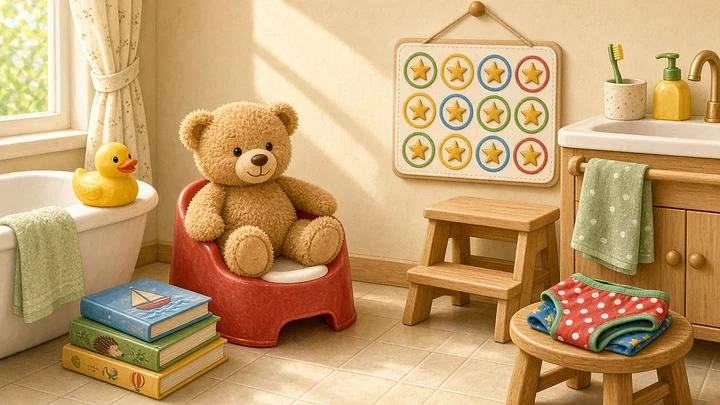
Potty training has been in the news recently, and I think that's a good thing. Whether your little one calls you Dad, Baba, Abu or Papa, it's a milestone every family goes through, and there's no shortage of mixed messages about when and how to do it.
So here's what's happening, what the NHS actually advises, and some gentle, fun ways to help your child get there.
Why potty training is in the news
On 5 October, BBC News reported that a potty training scheme in York is being rolled out to 20 more council areas in England.
Since April, families in York with a child starting Reception were sent a potty training guide alongside their school offer. Information and support were also offered through GP surgeries, pharmacies, family hubs, nurseries, schools and libraries, with drop-in sessions for parents and extra training for early years staff.
The figures reported by the BBC show that in September 2025, 148 of 1,364 Reception pupils in York (11%) weren't fully toilet trained when they started school. This September, that fell to 85 of 1,374 (6%), a drop of more than 40%.
The scheme was developed and funded by the children's charity Kindred Squared. Its research suggests around one in four children started school in England and Wales last year without being fully toilet trained, and teachers told the charity they were losing, on average, the equivalent of a day a week of teaching time dealing with it. Councils signed up to follow York's lead include Suffolk, Hampshire, North Yorkshire, Rotherham, Solihull, Redbridge and Hounslow.
For me, the encouraging part isn't the numbers. It's that when parents were given clear, simple advice and a bit of support, things improved. Most of us aren't short on love or effort. We're short on clear information.
When should you start?
The NHS says almost all children can be potty trained between 18 months and two and a half years old. Importantly, it says you don't need to wait for your child to show signs or ask for the potty before you start. Waiting for the "perfect time" can mean putting it off longer than you need to.
ERIC, The Children's Bowel & Bladder Charity, explains that research shows it's better for children's bladder and bowel health to stop using nappies between 18 and 30 months. It also suggests you can start getting your child used to the potty much earlier, from when they can sit up, usually around 6 to 9 months, with short, relaxed sits.
If your child has special educational needs and disabilities (SEND), the NHS is clear that they can still learn toileting skills, though they may need more time or extra support. ERIC has guidance specifically for children with additional needs.
Getting ready: small steps first
Preparing doesn't have to happen all at once. The NHS suggests:
- reading books together about using the potty
- using dolls or teddies to show how the potty works
- letting your child practise sitting on the potty
- talking about wees and poos as they happen, so your child starts to recognise them
- changing nappies in the bathroom where you can
- letting them help with flushing the toilet or washing hands after a change
- giving around 30 minutes of nappy-free time after they've done a wee or poo
Check for constipation first. The NHS says children should be doing soft poos at least every other day. If poos are hard, dry or pebble-like, or your child is straining, they may be constipated. Speak to your health visitor or GP and get this sorted before stopping nappies, because painful poos can make children afraid to go.
Potty or toilet? Either works. Some families start with a potty, others go straight to the toilet with a training seat and step. If you use a step, the NHS says it should be high enough that your child's knees are higher than their hips when sitting.
What you'll need. You don't need to spend much. A potty (or a training seat and step), pants, clothes that are easy to pull up and down like joggers or leggings, spare clothes for accidents and, if you drive, a washable car seat liner.
The NHS five steps
Once you're ready, the NHS sets out five simple steps:
- Tell your child what's happening. Pick a fairly calm time without too many changes, and explain they'll be using the potty or toilet instead of nappies.
- Stop daytime nappies, including pull-ups. Switch to pants so your child can notice when they're wet or dry. Keep nappies for naps and night-time for now.
- Build potty trips into the day. Don't wait for them to tell you. Encourage a try when they wake up, after meals, before leaving the house, before naps, when you pass a toilet while out, and before bed.
- Praise the effort. Celebrate trying, whether or not anything happens. A clap, a sticker or a reward chart all help.
- Build their independence. Gradually encourage them to wipe, wash their hands, flush, pull their pants up and down, and choose which pants to wear.
Fun ideas to help little ones along
Making it playful takes the pressure off for everyone. A few ideas:
- Teddy goes first. Let a favourite teddy or doll "use" the potty, then cheer for them. Children often love being the teacher.
- Pick their own pants. Let your child choose pants with their favourite colours or characters, so wearing them feels exciting.
- Say goodbye to nappies. NHS Healthier Together suggests helping your child say goodbye to nappies, which can make it feel like a big, proud moment.
- A sticker chart. Put it at their height so they can add their own stars.
- Story or song time. If sitting still is tricky, the NHS suggests reading a short book or singing a song together while they sit.
- Handwashing games. CBeebies Parenting has a handwashing sing-along. Making bubbles and singing can turn it into the best part.
When accidents happen
They will, and that's completely normal. The NHS advice is to try not to get angry or upset. Stay calm, clean up together and move on. Every accident is another chance to practise.
Big changes like starting nursery, moving house or a new baby can cause a wobble, even when things were going well. Keeping routines as steady as possible helps.
Night-time dryness usually comes later. The NHS says most children learn to stay dry at night after they're dry during the day, and it happens naturally over time. Once your child is regularly dry after naps, you can try pants at nap time.
A word for the dads
Consistency matters, and the NHS points out that potty training goes more smoothly when everyone looking after your child follows the same approach. That means Mum and Dad on the same page, and a quick chat with the nursery, childminder or grandparents about the routine you're using.
It's also a lovely chance for dads to take the lead. A weekend at home, a stack of potty books and a sticker chart is a pretty good project to share.
For Muslim families, teaching little ones to wash with water after using the toilet can be part of the process from the start. A small jug or bottle kept by the toilet makes it easy for small hands to practise.
Where to get help
You don't have to figure this out alone. The NHS suggests speaking to:
- your health visitor (you can also ask about potty training at your child's 9 to 12 month and 2 to 2-and-a-half year development reviews)
- your nursery, childminder or pre-school
- a children's centre or Best Start Family Hub
- your GP, especially if you're worried about constipation or your child's progress
The NHS Best Start in Life "Potty training your child" page and ERIC's website (eric.org.uk) both have clear, free guidance. And if your child is about to start school and still needs help, the NHS says it's never too late. Your health visitor can help you make a plan.
Quick takeaways
- Most children can be potty trained between 18 months and two and a half, and you don't need to wait for signs.
- Check for constipation before you stop nappies.
- Ditch daytime nappies, build regular potty trips into the day and praise every try.
- Keep it fun: teddy demos, new pants, sticker charts and songs.
- Stay calm about accidents and keep everyone on the same routine.
- Ask your health visitor if you need support. That's what they're there for.
Every child gets there at their own pace. Be patient, be consistent, and celebrate the little wins along the way.
Zeeshan Khurram
Founder, THE DAD GRAM — dad of three, sharing real family life since 2018.
Related Stories


World Mental Health Day: Simple Ways to Help Our Kids Talk About Feelings
Saturday 10 October is World Mental Health Day. Here are gentle, everyday ways to help children name their feelings, open up and know they can always come to us.
Read More
Farage, the Racism Row and Our Children: How to Raise Kind, Empathetic Kids
The row over claims about Nigel Farage's schooldays, which he denies, has put race back in the headlines. Here's how we can help our children grow up kind, confident and proud to live together.
Read More
Building Zaira’s Enchanted Flower Garden Nursery
Eight years ago, we set out to create a magical space for our daughter. Take a look back at how we built Zaira's enchanted flower garden nursery, featuring handmade details and a custom carved gold crown.
Read More